
Improving Conversion in Luxury E-commerce Through UX Research
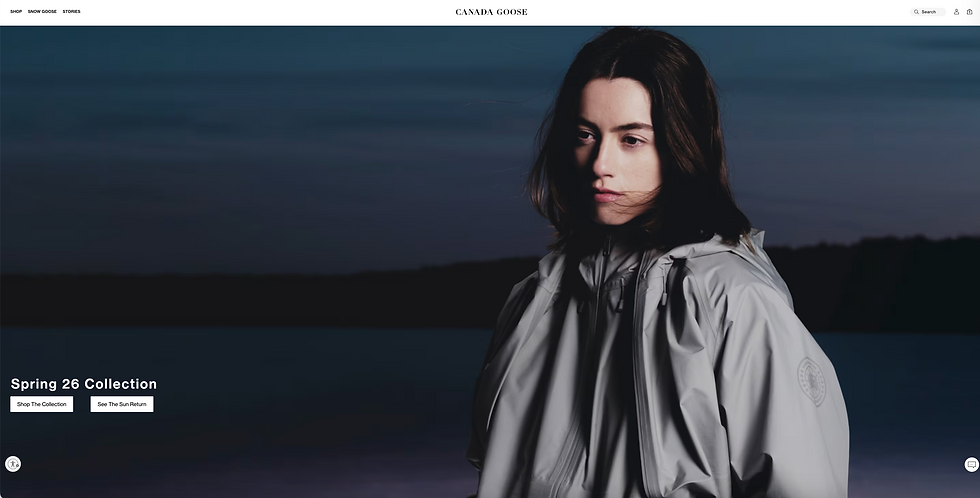
A usability study on Canada Goose, exploring how navigation, product understanding, and sizing impact user confidence and purchase behavior.
Focus
UX research + Product thinking
Type
Team Work

01 Overview
How can we reduce friction and improve conversion in a luxury e-commerce experience?
This project explores how usability issues in navigation, product understanding, and sizing impact user confidence and purchase behavior on Canada Goose.
Our research design was depended on UserTesting dashboard.
Heading 2
02 My Role
Designed usability testing framework (28 tasks)
Conducted user testing and behavioral observation
Analyzed interaction data (clicks, time-on-task)
Synthesized insights into product recommendations
03 Key Insights
1. Users tolerate friction—but lose confidence before conversion
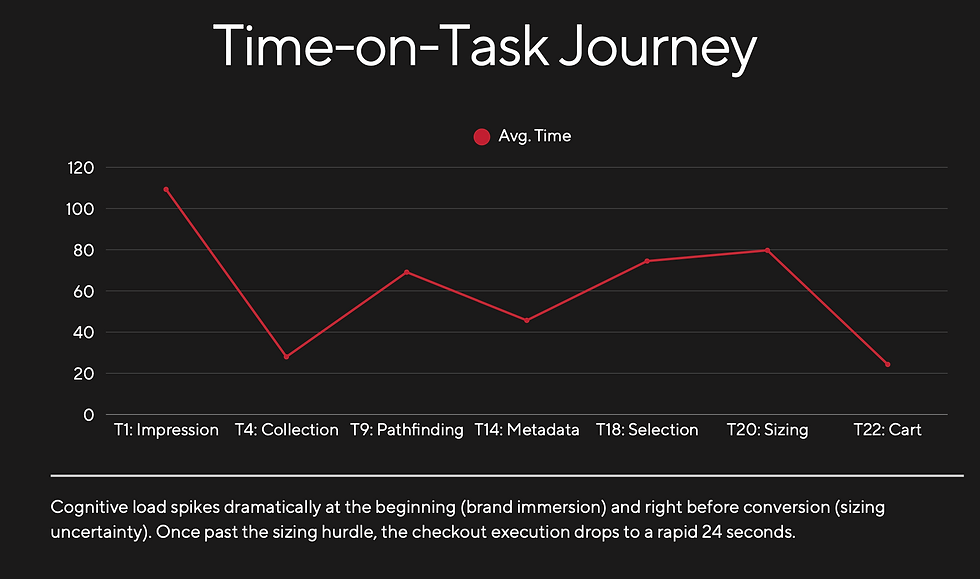
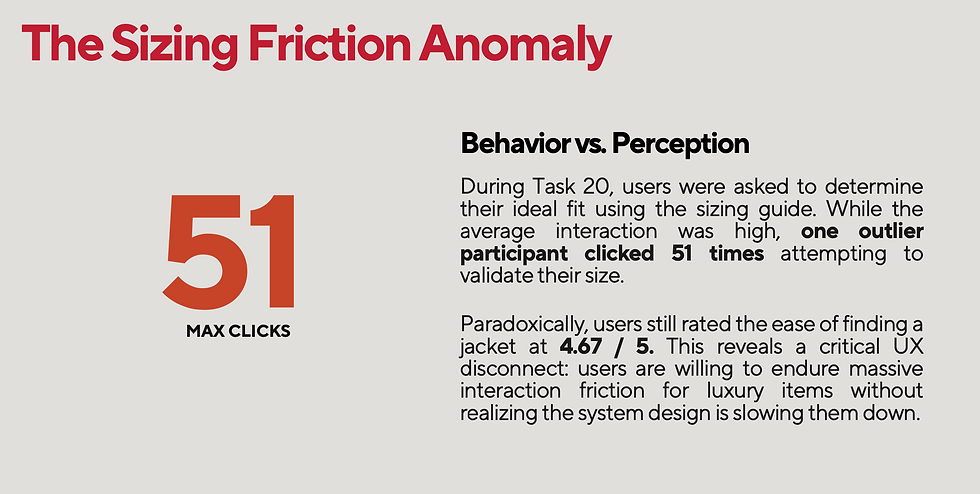
Users were willing to navigate complex flows, but hesitation increased significantly at the sizing stage, where confidence dropped.
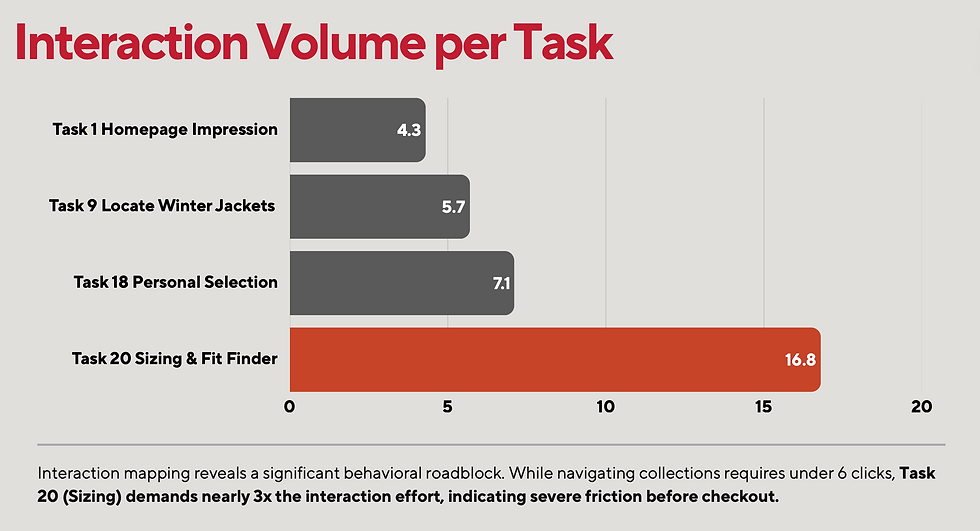
Lower success rates in key tasks suggest that users struggle to locate important information efficiently.
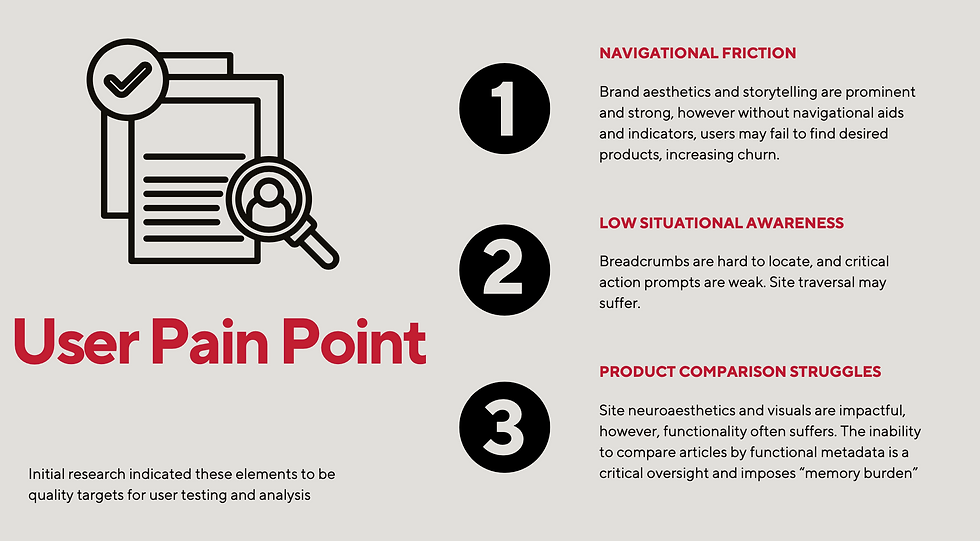
The current navigation does not align well with user expectations.
2. Navigation hierarchy is unclear
04 Opportiunity Areas
1. Reduce decision friction at the sizing stage
Sizing uncertainty represents the highest conversion risk. Improving guidance here can directly impact purchase completion.
2. Enable faster product comparison and evaluation
Users need clearer functional differentiation (e.g., warmth, fit, use case) to make confident decisions.
3. Balance brand storytelling with product accessibility
Bringing key product categories and CTAs earlier in the journey can shorten time-to-decision.
05 Product Thinking & Recommendations
1. Optimize homepage for faster entry and easier understanding the highlights
Prioritize product visibility and clear “Shop Jackets” CTAs to reduce entry friction.
2. Introduce Structured product comparison tools
Enable side-by-side comparison based on warmth, fit, and usage scenarios to reduce cognitive load.
3. Redesign sizing experience as a guided flow
Transform sizing from a static reference into an interactive recommendation system (e.g., fit assistant, model references).
What I learned...

-
Learned how user perception differs from actual behavior
-
Identified how UX decisions directly impact conversion
-
Applied research insights to product-level decisions